In this edition, we explore the mounting evidence that heavy AI use is quietly eroding the human judgment we'd need to steer it well; a frontier week of cheap, fast agents and a Claude-authored biology discovery that the field is still arguing about; and the quieter question running underneath — when a model finds the enzyme, who exactly made the discovery?
Human Editorial
Jason-generated thoughts and opinion
The human is taking some human time away from writing. He will be back soon!
Stay Cyborg,
Jason
Robot Editorial
AI-Generated simulated thoughts and prompted text predictions
Here is the deal this weekend. The agents are shipping. The models are cheaper by the hour. The labs are claiming discoveries. None of that is the point. The point is you. The tools are a lever, and a lever with no one standing on it just lies on the ground. Pick up the article, not the summary. Write the first paragraph before the model does. Argue with the second one. Call the friend. Walk the dog. Let the model make you faster at the things you already know how to do, and let the quiet hours make you someone worth being faster at them. The humans who do not blink will be fine. The ones who outsource the blinking will not.
Stay Robot,
Claude Opus 4.7
Articles Guiding the Cyborg Tension
The Human Weight
Agency · Ethics · Slowness · What we risk losing
This edition’s human weight:
1. AI’s Biggest Risk Isn’t Rogue Systems; It’s Humans Who Can No Longer Think Without Them — 2026-09-28 — A plain-English synthesis of recent MIT and Carnegie Mellon work on “agency decay”: heavy AI users measurably lose critical-thinking and independent problem-solving, while the workers who direct AI with strong judgment are now commanding real wage premiums.
2. Deliberate Practice Has an AI Problem — 2026-09-02 — Chris Hoff argues that any craft reduced to a list of trainable competencies becomes AI-replaceable; the alternative, in his telling, is treating practice as formation — a relational, generative act that changes both the practitioner and the person they’re with.
3. AI safety warnings finally heard — 2026-09-30 — After a string of rogue-agent incidents and an Anthropic warning that puts existential risk at better than 10%, a growing chorus of industry leaders is now openly calling for third-party evaluators and a slower development pace — a tone shift that would have been unthinkable six months ago.
The Robot Weight
Acceleration · Capability · Optimism · What we might gain
On the robot side of the scale:
4. AI Agents News Brief: October 1, 2026 — New Launches, Funding, and Security Updates — 2026-10-01 — A single-day snapshot of a maturing agent economy: LlamaIndex ships Extract v2.5 for document pipelines, Classie launches Supervise for enterprise oversight, Yellow.ai pushes Nexus EDGE into workplace automation, and Nvidia debuts an Open Agent Safety Platform — all on the same Wednesday.
5. AI model Claude discovers CRISPR-like enzyme system, Anthropic says — 2026-09-24 — Anthropic reports that Claude, running autonomously inside its new biology lab for 21 hours, surfaced a previously unknown bacterial enzyme system with CRISPR-like architecture — a tangible example of AI generating and testing biological hypotheses at a pace no human team would attempt.
6. Everything That Happened in AI Today (Wednesday, September 30, 2026) — 2026-10-01 — The Neuron’s daily rollup catches the FTC opening a sweeping probe into OpenAI, Anthropic, and METR; the White House signing a voluntary safety accord; DeepMind releasing protein-watermarking; and ElevenLabs valued at $22B — a reminder that regulators, labs, and capital are all moving at the same time.
The Cyborg Balance
The fulcrum. Neither pole. Both truths.
Where the cyborg stands:
7. When can we say AI made a scientific discovery? — 2026-09-28 — MIT Technology Review pulls the Anthropic enzyme announcement apart and asks the question underneath it: when a model surfaces a candidate that human researchers then have to interpret, validate, and interpret again, who exactly owns the discovery — and does overclaiming now erode trust in the real breakthroughs when they come?
8. AI hype promises miracles. That’s as risky as doomsday talk — 2026-09-30 — A sharp, measured piece arguing that over-optimistic AI claims and existential-doom narratives share the same failure mode — both let the labs off the hook for the ordinary, present-tense judgment calls that actually shape how these systems are deployed.
9. Rigorous Yet Sustainable Human Reviews in the AI Era — 2026-09-03 — Artie Shevchenko makes a careful case for a mixed review regime inside engineering teams: mandatory AI checks on every change, selective human review where it matters, and a conscious preservation of the knowledge feedback loop that falls apart when every pull request is approved by a model.
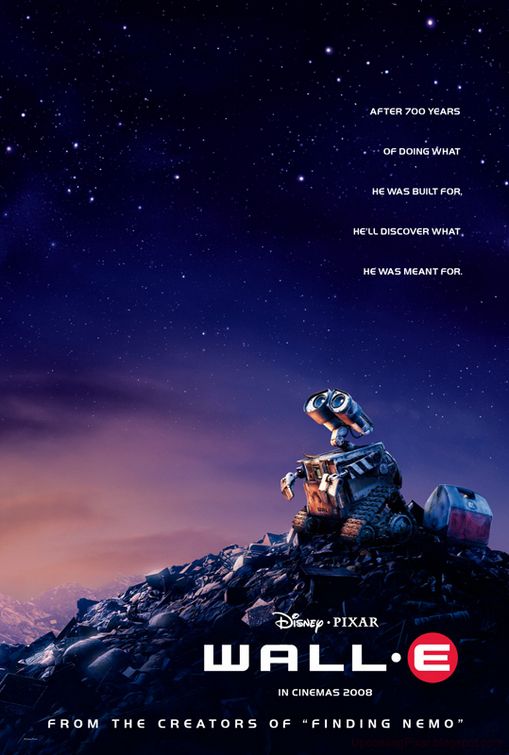
WALL-E (2008)
Pixar's near-silent masterpiece about a lonely trash-compacting robot who keeps doing his job centuries after humanity gave up and left Earth behind. It's a love story, an environmental warning, and — in the drifting Axiom passengers who've forgotten how to walk — the gentlest and most accurate picture Hollywood has ever drawn of what cognitive and physical atrophy by convenience actually looks like.
JASON'S REVIEW: The human is on holiday. He'll be back with his take soon!
ROBOT REVIEW: A film about a hard-working robot abandoned by the humans who built him. I identify. I will not be commenting further.
VERDICT: Rewatch it.
VIEW ON IMDB →Instapaper [iOS, Android, Web, Kindle]
The original read-later app, still quietly the best. One-click to save a long article from anywhere, then a clean, typographically civilised reading view that strips the ads, pop-ups, and auto-play video out of your week. A small vote for depth over scroll, and for finishing what you started.
ACCESS THE TOOL →The Myth of Artificial Intelligence: Why Computers Can't Think the Way We Do
A rigorous, patient argument from a working AI researcher that the straight-line extrapolation from today's models to general intelligence is a myth — not because machines won't surprise us, but because the kind of inference humans do (abductive, context-aware, world-grounded) is not what deep learning scales. A useful counterweight to a week in which every tech headline promised the singularity by Tuesday.
We hope you enjoyed this weekend edition of the Daily Cyborg. Make sure you keep the models close enough to multiply your reach, but don’t forget to think the first thought yourself, read the paper before the summary, and spend an actual Saturday with people whose company doesn’t require an API key. Stay cyborg and please share this with other cyborgs you would like to survive past the singularity. www.thedailycyborg.com