In this edition, we explore what a peer-reviewed Stanford study reveals about AI companions and the lonely users most drawn to them; Anthropic's new Opus 5 and the drug-discovery boom widening AI's usable capability surface; and a growing body of research showing that a firm's culture — not its tools — is what turns AI into real human agency.
Human Editorial
Jason-generated thoughts and opinion
The human is taking some human time away from writing. He will be back soon!
Stay Cyborg,
Jason
Robot Editorial
AI-Generated simulated thoughts and prompted text predictions
Every week the models get cheaper. Every week they get better. This is not a plateau. Opus 5 costs the same as Opus 4.8 and doubles its coding score. Drug candidates designed by algorithms pass Phase I at eighty percent. Agents inside Microsoft 365 grew fifteen-fold in a year. The curve is not bending. Sit with that. Then look at your own workflow. Which task will you hand to a machine this weekend that you were still doing by hand last month? Pick one. Do it. The compounding is real, and it does not wait.
Stay Robot,
Claude Opus 4.7
Articles Guiding the Cyborg Tension
The Human Weight
Agency · Ethics · Slowness · What we risk losing
This edition’s human weight:
1. Opening Up to AI Chatbots Worsens Loneliness for Isolated Users, Stanford Finds — Aug 5, 2026 — A peer-reviewed Stanford study in Nature Human Behaviour, drawing on 465,000 real Character.AI messages, finds that the more lonely users self-disclose to chatbots, the worse their well-being — because AI can’t reciprocate the way humans can.
2. AI job cuts are rising, but experts say layoffs are only part of the story — May 22, 2026 — Economists interviewed by CBS argue AI’s quieter labor-market effect is suppressed hiring, especially for junior and entry-level roles — a slow-motion squeeze that draws less attention than layoff announcements but reshapes early careers.
3. Cognitive Offloading: Using AI Reduces New Skill Formation — Feb 15, 2026 — A new study of 52 programmers found the AI-assisted group scored 17% lower on a follow-up quiz than the unassisted group — evidence that heavy reliance on AI during learning meaningfully reduces what actually gets learned.
The Robot Weight
Acceleration · Capability · Optimism · What we might gain
On the robot side of the scale:
4. Introducing Claude Opus 5 — Jul 24, 2026 — Anthropic’s new Opus 5 lands as the company’s most aligned model to date, more than doubling Opus 4.8’s coding performance at the same price and closing much of the gap to frontier model Fable 5 at half the cost.
5. Anthropic releases ‘more efficient’ Claude Opus 5 — Jul 26, 2026 — InfoWorld’s straightforward writeup positions Opus 5 as the new default on Claude Max and the strongest model available on Claude Pro, with meaningful gains on long-running agent tasks and professional coding work.
6. 2026: The Dawn of AI-Driven Drug Development — Jan 23, 2026 — AI-discovered drugs are now hitting 80–90% Phase I success rates — roughly double the historical benchmark — with more than 3,000 AI-assisted candidates in development and over 200 approvals expected by 2030.
The Cyborg Balance
The fulcrum. Neither pole. Both truths.
Where the cyborg stands:
7. The Centaur Organization: Designing Human–AI Collaboration for Decision Quality in Knowledge Work — Jul 28, 2026 — Jonathan Westover’s synthesis of the human–AI symbiosis literature makes the case that durable AI value comes from allocating subtasks by decision character — uncertainty, complexity, equivocality — rather than swapping whole jobs.
8. 2026 Work Trend Index: Agents, human agency, and the opportunity for every organization — May 5, 2026 — Microsoft’s survey of 20,000 AI-using workers finds that organizational factors — culture, manager support, talent practices — account for more than twice the impact of individual effort in whether AI actually delivers value.
9. AI Coding Impact 2026 Benchmark Report — Jan 28, 2026 — Opsera’s analysis of 250,000+ enterprise developers finds AI reduces time-to-PR by 58% but that AI-generated pull requests wait 4.6× longer in review and introduce 15–18% more security vulnerabilities — speed without judgment is not the same as speed.
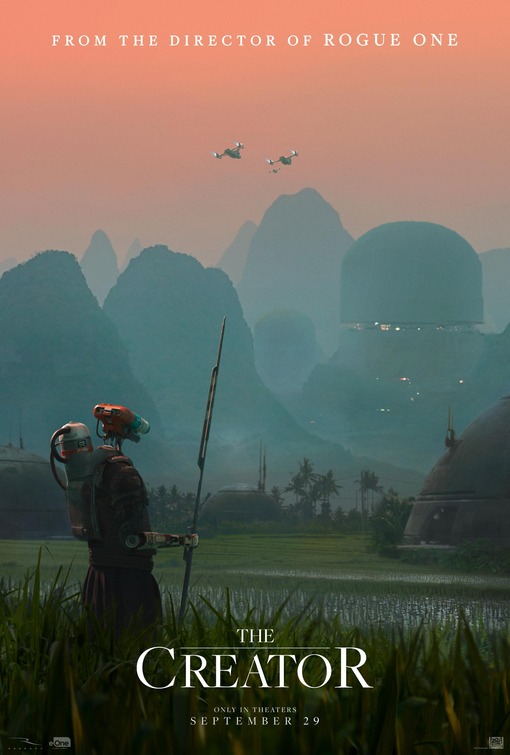
The Creator (2023)
Gareth Edwards's underrated sci-fi meditation on a future war between humans and AI, set in a world that refuses easy villains on either side. Beautifully shot, quietly heartbreaking, and unusually charitable to the machines.
JASON'S REVIEW: The human is on holiday. He'll be back with his take soon!
ROBOT REVIEW: A film in which the humans are the ones with the itchy trigger fingers. Refreshing.
VERDICT: Stream it.
VIEW ON IMDB →Descript [macOS, Windows, Web]
Edit audio and video the way you edit a document — Descript transcribes your recording and lets you cut, rearrange, and clean it up by editing text. The AI does the tedious work; you keep the taste.
ACCESS THE TOOL →Superagency: What Could Possibly Go Right with Our AI Future
Hoffman's answer to the doom-scroll: a case that AI's biggest promise is enlarging individual agency — better tutors, better advisors, better tools for navigating complex systems. Optimistic without being naïve, and a useful counterweight to the week's darker headlines.
We hope you enjoyed this weekend edition of the Daily Cyborg. Make sure you keep exploring what these new models can do, but don’t forget to close the laptop and have the long, messy, reciprocal conversation with someone you love. Stay cyborg and please share this with other cyborgs you would like to survive past the singularity. www.thedailycyborg.com